

The Independent Writer's Workshop x David Cornwell
Narrative voice, stylistic choices and the discipline of art

Few writers capture the contradictions of South Africa with as much wit, urgency, and sharpness as David Cornwell. David is the author of the new and acclaimed novel Hell of a Country, published by Kwela. He writes with an eye for both the weird and the deeply human, he unpacks what it means to live, love, and create within a fractured landscape.
As part of the DIY MFA series, I had the chance to chat with him to talk about the craft of writing. We discuss what he believes makes a short story sing, what sustains a novel, and how poetry can cut straight to the bone.
You’re in for a treat. David is a born teacher, and his answers will inspire you as much as they educate you. I have broken this stack into two parts: a Q&A with David, followed by his suggestions. Grab the snacks and here we go!
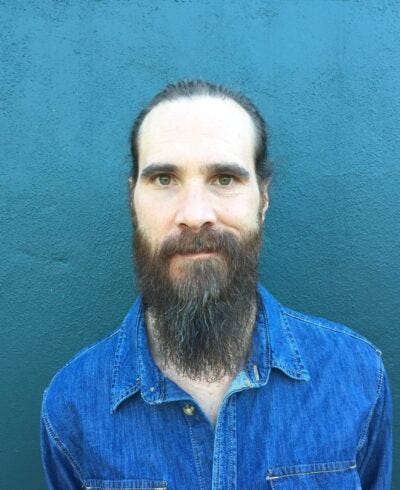
Part One: David, in Conversation
Having read his latest novel, I was intrigued to hear more about how David approaches his craft. His words are in the block quotes below:
RHH: Narrative voice is such a crucial decision. How do you choose the voice through which to tell a story, and how do you think first-person versus third-person narration shapes a novel differently?
For me, voice is the most essential element in narrative because it’s the vessel for everything else. It’s the story’s consciousness, its worldview. It determines what is noticed and what is ignored, what is celebrated and what is criticised as the plot takes shape.
Point of view has a huge influence on voice, so deciding between first- and third-person narration is definitely one of the fundamental decisions you have to make when you start a new project. It depends on the kind of story you are wanting to tell and what kind of effect you want to create for the reader.
You’d probably choose a first-person narrator if the story is rooted in the subjective experience of one main character. It’s a classic choice for coming-of-age stories, because we co-experience the character’s transformation, and it’s also the perfect vehicle for an unreliable narrator, where the reader gradually realises the person telling the story can’t be trusted. Choosing the more ‘authorial’ third-person point of view, on the other hand, provides other opportunities. I tend to find it easier to write action scenes when I’m ‘looking over a character’s shoulder.’ Another strength is the potential for polyphony: the ability to weave together multiple voices and distinct points of view.
Sometimes this decision comes intuitively, but sometimes it can be difficult to tell what the ‘right’ perspective is going to be – so I’ll write just one scene that I know I want to put in the story I’m working on, and then rewrite it from a different point of view. Usually this will help me settle on an approach because it gives me something to react to as a reader, and I can start to get a better understanding of which set of tools are best suited to the job at hand.
Some really sage advice here. Advice I will be taking on immediately.
I’m always curious as to how writers get the job done, and when, considering the intense schedules we keep.
RHH: Some writers prefer early mornings and coffee, some late nights and whisky. What’s the David Cornwell writing routine?
I wish I had more time to give to writing every day, but at the moment I wake up very early and squeeze in a couple of hours before I start my day job. So I make slow progress in the dark - like the “labour of moles” from that Ivan Vladislavic book. Coffee is always involved.
Labour of moles! That’s the first time I’ve heard that one, and now I’ll never be able to see it any other way.
Another thing that I am deeply interested in is where a writer draws their inspiration from. David’s latest reminds me of the spare yet impactful writing found in books like Flesh by David Szalay. (What’s in a name?)
RHH: Who are your literary greats—the writers you turn to for guidance or inspiration?
Denis Johnson is unquestionably my favourite writer. He belongs in his own category. But, behind him, I tend to do as much re-reading as new reading, so there are a whole bunch of writers I revisit all the time – honestly, too many to reel off and not feel regretful about forgetting others. (At the moment, in the pile next to the bed, I’ve got a collection of Eudora Welty short stories, poetry by Edgar Allan Poe, Dominique Botha’s brilliant debut novel False River, and Caryn Dolley’s non-fiction book about André Lincoln, Man Alone.)
These are some fascinating choices and definitely reflect in the way David writes. I was out to dinner with friends recently and the topic of whether or not writing is teachable came up. I had to ask a professional for their opinion, and I’m glad I did!
RHH: You have both studied and taught creative writing. Is there a part of writing that you think is, perhaps, not teachable?
Once the words are on the page, there are all kinds of skills a writer can learn and improve. Musicians absorb theory, painters study composition, and dancers practice technique for years. Why wouldn’t writing share this quality with other arts?
But, on the other hand, yes - there is also a dispositional quality to writing (and all art-making) that is less teachable. This has more to do with the writer’s unique way of seeing the world - what they notice, what moves them, and where their inspiration comes from. It’s the thing that makes people want to write in the first place, the impulse that Albert Camus described as “this slow trek to rediscover, through the detours of art, those two or three great and simple images in whose presence [their] heart first opened.”
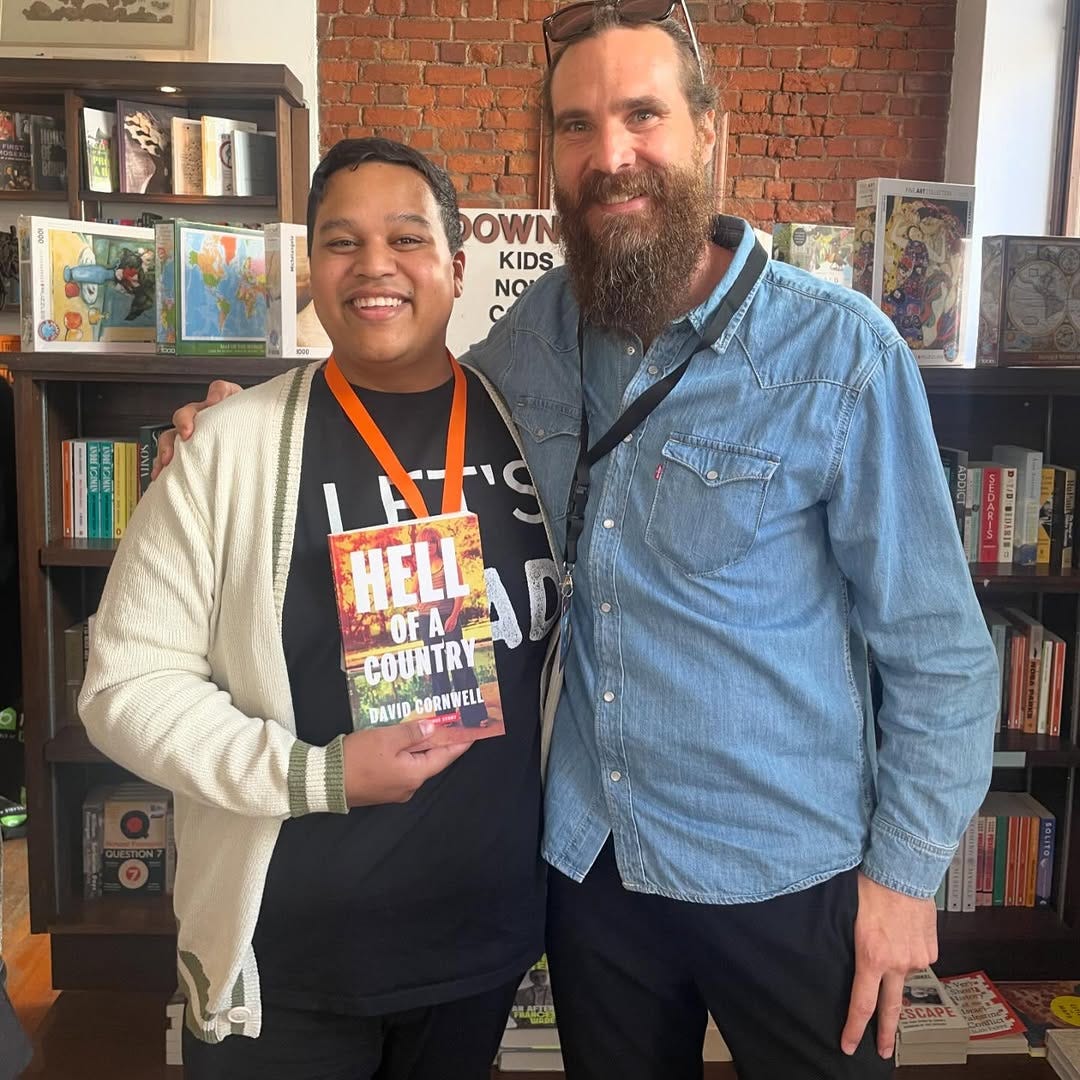
After unpacking his own writing process and philosophy, David turned his attention to the works that have shaped him as both reader and writer. True to his generous spirit, he offered a set of recommendations in the form of a short story, a poem, and a novel. Together, they reflect not only his literary taste but also his deep belief in the power of voice, history, and revelation in storytelling.
Part Two: From His Shelf to Yours
Short Fiction
David begins with the form he loves most: the short story. For him, the very best examples do more than tell a tale on the page; they sound like someone speaking directly into your ear. His top picks, Denis Johnson’s “Car Crash While Hitchhiking” and Tim Winton’s “Big World,” capture that raw, spoken quality while guiding readers toward moments of quiet but powerful revelation.
I love short stories more than any other form of literature. And my favourite kind of short story is exemplified by two of my all-time favourites, “Car Crash While Hitchhiking” by Denis Johnson (from the collection Jesus’ Son) and “Big World” by Tim Winton (from The Turning).
As a pairing, they are incredible examples of what theorists sometimes call skaz narratives – a literary style where the story feels like it’s being told aloud by the character, complete with their unique rhythms of speech. In other words, a style where the power of the language is in its ‘spoken’ rather than ‘written’ qualities.
But the other thing that links these two stories is how the voice leads the narrator - and us - to a moment of personal insight over the course of the story. I just love stories like this, where the action is centred around quietly revelatory moments (what you might call ‘low-key epiphanies’).
In “Car Crash While Hitchhiking,” Johnson throws us directly into the hazy, drug-addled consciousness of his unnamed narrator. The voice is the story: it’s fragmented, unreliable, and yet possessed of a strange, desperate poetry. You’re not just reading about a series of events; you’re experiencing them through the narrator’s disjointed perceptions. After he witnesses a horrific accident, the fog momentarily lifts, and while he’s staring at the victim of the car crash he’s struck by a moment of terrifying clarity about fate and his place in the universe: “I looked down into the great pity of a person’s life on this earth. I don’t mean that we all end up dead, that’s not the great pity. I mean that he couldn’t tell me what he was dreaming, and I couldn’t tell him what was real.”
Tim Winton’s “Big World” is about a working-class Australian teenager chafing at the confines of his small town, his dead-end job, and his seemingly foreclosed future. He’s telling the story of an impromptu road trip he takes with his friend, Biggie, which ends with their old van breaking down in the desert. Staring out at the vast, open landscape, the narrator has a sudden realisation of what freedom, friendship, and the terrifying uncertainty of the future truly mean. It’s a perfect, shimmering moment where his voice is imbued with the weight of feeling on the cusp of the rest of your life: “In the hot northern dusk, the world suddenly gets big around us, so big we just give in and watch.”
Poetry
When it comes to poetry, David looks to work that balances emotional depth with precision of craft. His choice, Gabeba Baderoon’s “How Not to Stop,” is a moving meditation on memory, loss, and silence, written with an economy of language that lingers long after reading.
Read the poem here.
I’ll go for a local poem recommendation: “How Not to Stop” by Gabeba Baderoon. I find her poetry incredibly moving and skilfully constructed, and this poem in particular was very useful to me during my research for Hell of a Country.
It’s a short poem meditating on the speaker’s father, a man who – we are told – was forcibly removed from his home in 1968 during the destruction of District Six. The father figure is presented to us in a series of succinct images, all of which have an ambivalent quality of great presence and haunting absence: “Pa sat at the head of the table, /not talking at supper”; “Pa stood in the driveway /with his back to us.” Notice how the diction of the poem is almost entirely monosyllabic, its language reflecting the clipped and withdrawn nature of its central subject.
The aloofness of the father figure is eventually explained when the speaker reveals how her Pa, when going to buy his groceries from the same neighbourhood in which he used to live, “rehearsed how not to stop” whenever he drove past his old house, practicing “how not to get out/and walk to the front door he had made.”
This image of the father being driven by a negative force – of forever being caught in that central tragedy of his dispossession, of life moving on around him while he remains stuck – is a powerful evocation of the lasting trauma caused by the forced removals and how it can be passed down to the next generation. The poem speaks eloquently of how the effects of such grief can be felt in the life that doesn’t happen, in the things that are never said.
The Novel
For his novel choice, David highlights a South African classic that captures the social and political pressures of its time with unflinching clarity. Alex La Guma’s A Walk in the Night is a novella of sharp detail and tragic inevitability, a story where setting and circumstance bear down on its characters until recognition comes too late.
For my novel recommendation, I want to talk about another South African text, Alex La Guma’s A Walk in the Night. This story is set in District Six in the early-1960s, and it depicts the downfall of Michael Adonis, who is unfairly fired from his job and – in his rage – is quickly swept up into a life of crime and gangsterism. (Quick disclaimer: A Walk in the Night is technically a novella, you can read it in a single sitting. But I think despite its brevity it’s able to achieve a couple of things that many of my favourite novels do.)
The book is ambitious, with its title (a reference to Shakespeare’s Hamlet) firmly placing it in the tragic tradition. It attempts to provide insight into the human condition by presenting the inevitable downfall of its protagonist, Michael Adonis, including a powerful moment of what the Greeks called anagnorisis - that devastating point of recognition when a character finally sees the true nature of their situation. Michael comes to understand that he is trapped by forces far larger than himself. He doesn’t simply make a bad choice; he is the inevitable product of a world designed to destroy him.
The power of the book also emerges from its use of language, which effortlessly explores a grand theme: it takes a huge, abstract idea and gives it flesh and blood. The descriptions of the physical world of the novella are so vivid that they almost entirely suffocate the characters’ interior lives. La Guma was a committed Marxist, and I think it’s fair to say that this text is an enactment of the idea that “it is not the consciousness of men that determines their existence, but, on the contrary, their social existence that determines their consciousness.” The oppressive atmosphere of Apartheid-era District Six isn’t just a backdrop; it’s an active force that presses in on every character, shaping their thoughts, fuelling their desperation, and ultimately sealing their fates.
A Final Thought
After sharing his reading recommendations, I turned the conversation back to Hell of a Country itself. The novel has often been described as a “creative reimagining,” a phrase that intrigued me because it sits somewhere between history and invention. I asked David what that label means to him.
RHH: Finally, because I have to ask: what, to you, is a creative reimagining?
When adapting a true story into a work of fiction, like I did with Hell of a Country, you basically have a few conventional phrases to choose from, each signalling a different relationship to the factual events. Terms like “based on a true story,” “inspired by true events,” “fictionalised retelling,” or “creative reimagining” all set different expectations for the reader.
Initially, I considered calling Hell of a Country a “fictionalised retelling,” but I felt that phrase didn’t quite capture what the project was trying to achieve. A “retelling” suggests the main goal is to narrate the known sequence of events, filling in gaps with imagined dialogue while staying faithful to the established facts of the case. But I wanted to do something a bit different. I wanted to use the framework of that shocking crime not just to tell a story about the individuals involved, but to explore the social pressures that shaped their actions. The novel tries to reimagine the Scissors Murder as a lens to examine the sickness of the society that produced such a tragedy.
I want to end by offering my heartfelt thanks to David Cornwell for taking the time to share his insights with such generosity and clarity. It’s not every day that a writer opens up both their craft and their bookshelf in this way, and I’m deeply grateful for the wisdom he’s offered here.
David is, quite simply, an extraordinary talent. His ability to balance narrative drive with psychological depth makes Hell of a Country one of the most compelling and important novels I’ve read in recent years. If you haven’t already, do yourself a favour and pick up a copy. You’ll be moved, challenged, and reminded of what powerful storytelling can do.
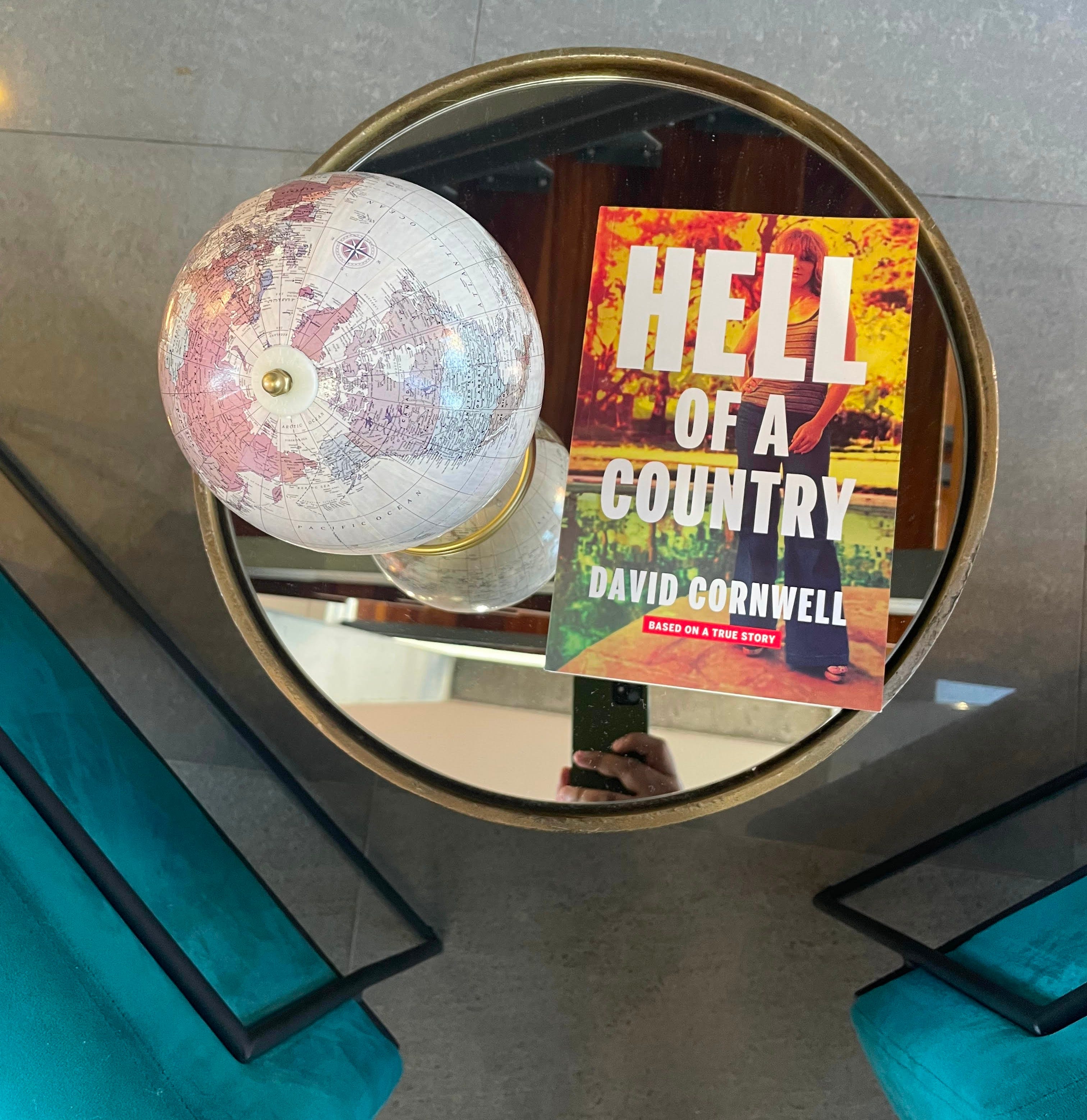
Stay subscribed for more conversations like these over the coming weeks!
As the ink dries,
Riley x
Excellent interview, David's responses as well as your questions - thank you.
"In other words, a style where the power of the language is in its ‘spoken’ rather than ‘written’ qualities."
What a wonderful insight! So helpful to think about it this way